Why Stone Town is worth a stay
For centuries this was the main port of the Swahili coast, trading cloves, ivory and enslaved people between Africa, Arabia and India. UNESCO inscribed the Stone Town of Zanzibar on the World Heritage List in 2000 as an outstanding example of that cultural fusion, and for its symbolic role in the end of the slave trade.
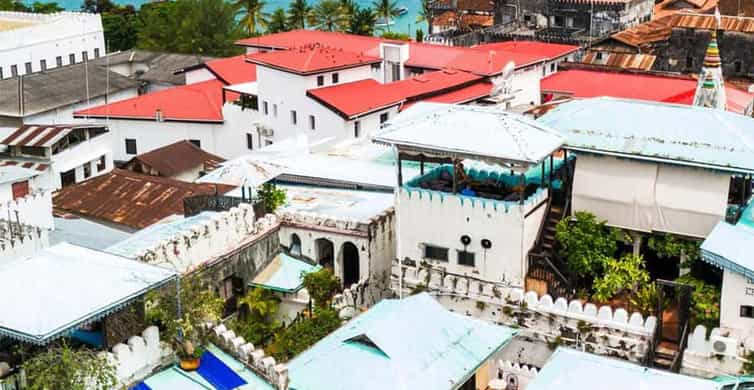
The result is a dense web of narrow lanes too tight for cars, lined with tall Swahili houses built of coral stone and lime, with wooden balconies, stone benches called baraza by the doors and small mosques on almost every corner. Most of the pleasure is in wandering, but a few sights deserve a plan; for the rest of the island, see places to visit in Zanzibar.
Top Stone Town attractions
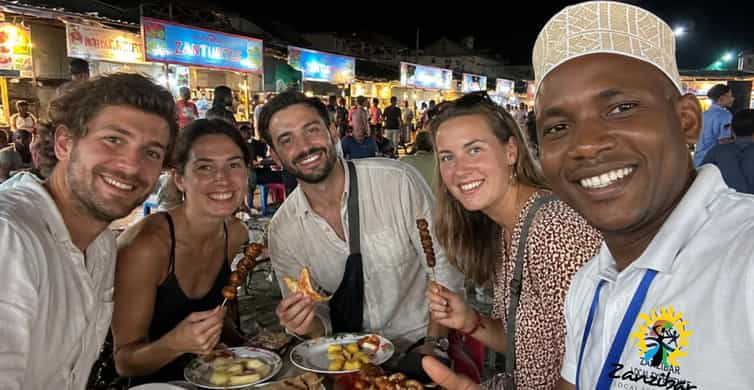
Forodhani Gardens is the seafront park in front of the Old Fort, restored by the Aga Khan Trust for Culture. Every evening from around sunset it fills with food stalls grilling seafood, skewers and the stuffed flatbread known as Zanzibar pizza. It is lively and fun, but agree prices before you order and choose food cooked fresh in front of you.
The Old Fort (Ngome Kongwe), built by the Omanis around 1699, is the oldest building in town. Inside are craft shops, a small arena for music and dance and the venue of the Zanzibar International Film Festival.
Next door stands the House of Wonders (Beit al-Ajaib), the sultan's ceremonial palace of 1883 and the first building in East Africa with a lift. Part of its façade and tower collapsed in December 2020 during restoration work, and at the time of writing it is still closed behind scaffolding with no confirmed reopening date. The Palace Museum (Beit al-Sahel) just north, on the history of the sultans' family, usually stays open; check on the day.
The Anglican Cathedral (Christ Church) was begun in 1873 on the site of the town's main slave market, closed by the sultan that year; the altar is said to stand where the whipping post was. The heritage centre beside it, with an exhibition, two underground holding chambers and a memorial sculpture, is the most important visit in Stone Town and a sobering one. Entry is paid and includes a guide.
Smaller stops include the Hamamni Persian Baths, public baths commissioned by Sultan Barghash in the 1880s and no longer in use; Darajani market, the busy central market of fish, fruit and spices, best early in the morning; and the Freddie Mercury House, a small museum on Kenyatta Road in Shangani, in the building where the family of the Queen singer, born in Stone Town in 1946, lived in the 1940s.
Carved doors, rooftops and sunsets
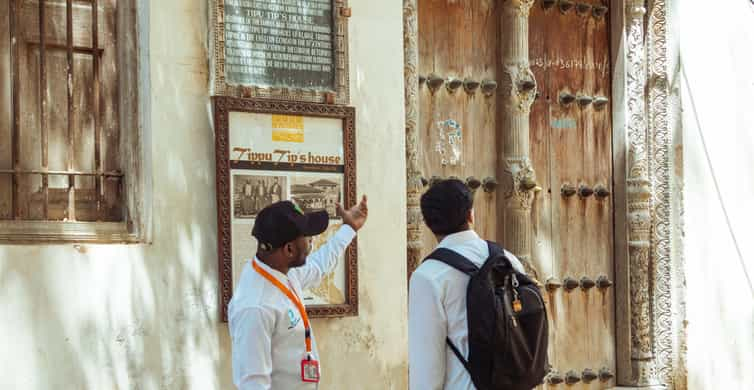
Stone Town is famous for its carved wooden doors, many of them with brass studs and frames covered in Qur'anic verses and motifs of lotus, fish or chains. Square-topped doors usually follow the Omani Arab style; doors with a rounded top show Indian influence. Look out for them all over town, especially in the lanes around Hurumzi and Kiponda.
The town faces west, so evenings are the best time of day. Watch the sun go down over the harbour from Forodhani, where local boys dive off the seawall, from the beach in Shangani or from one of the rooftop bars and terraces in the old town. On a calm evening a short sunset trip on a dhow is another option.
Things to do in Stone Town: walking tour tips
Getting lost is part of the experience, and offline maps work well, but a guided walk of two to three hours explains what you would otherwise miss: the history of the houses, the trading communities and the slave market. Use a licensed guide, booked through your hotel or a tour with reviews, rather than the young men who offer to show you around in the street. Compare options on our Zanzibar tours page.
Start early, before 10 am, when the lanes are cooler and quieter; carry water and small notes for entry fees. Stone Town is also the base for the classic half-day trips: a boat to Prison Island and its giant tortoises, and a spice farm tour in the countryside. Both combine easily with a city walk on the same day.
How long to stay and where to stay
One full day covers the main sights; two nights lets you enjoy an evening at Forodhani, a sunset and a half-day trip without rushing. Most visitors spend these nights at the start or end of the holiday, then move on to the Zanzibar beaches in the north or east. See the best time to visit for the seasons.
Shangani, the seafront district on the western tip, is the quietest and most upmarket area and close to the main restaurants. The lanes behind the Forodhani seafront and around Hurumzi put you in the middle of the old town, while Malindi, near the ferry port, is practical for early boats but busier. Most old-town hotels are in restored houses with steep stairs and limited car access. Our where to stay guide compares the areas across the island, and ferry and airport transfers covers arrival.
Safety at night and dress code
Stone Town is generally safe, but petty theft happens. After dark, stick to lit, busy routes such as the seafront and Kenyatta Road, take a taxi rather than walking through empty alleys late at night, and keep phones and bags out of sight. Touts offering tours, taxis or "help" can be persistent; a polite, firm no is enough.
This is a conservative Muslim town. Cover shoulders and knees, in both men's and women's clothing; swimwear and bare chests belong on the beach. Ask before photographing people, and during Ramadan avoid eating or drinking in the street in daylight. Our visa, insurance and safety guide has more on local customs.