A prison that never held prisoners
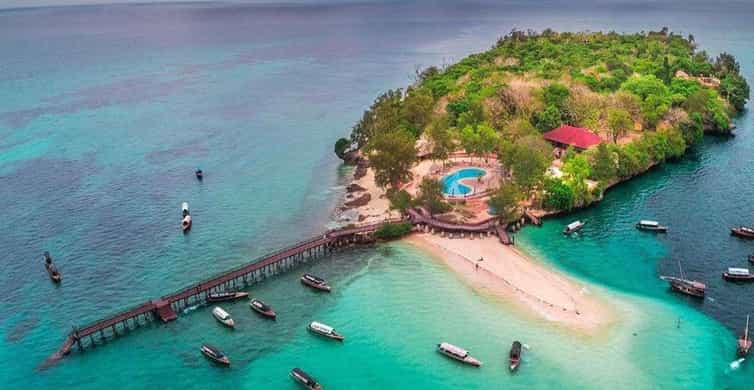
Changuu was uninhabited until the 1860s, when it was used by Arab slave owners to hold enslaved people. In 1893 Lloyd Mathews, the British First Minister of Zanzibar, bought it to build a prison, finished the following year. No prisoners were ever housed there.
Instead the island became a quarantine station for the British East African territories, mainly for suspected yellow fever cases from arriving ships, and it was officially renamed Quarantine Island in 1923. Travellers were kept for one to two weeks before continuing their journey. Out of season the island served as a leisure retreat. The old prison buildings still stand; part of the compound is now a restaurant, and there is a small resort on the island.
The giant Aldabra tortoises
The island's main attraction arrived in 1919, when the British governor of the Seychelles sent four Aldabra giant tortoises as a gift. They thrived, and by the 1950s there were around 200. Theft for the pet trade and for food then almost wiped them out: by 1996 only seven were left. A protected sanctuary was set up, and the population has since recovered to more than 100, including some very old animals.
You walk among them inside the enclosure, and a separate area keeps hatchlings safe during their first months. Staff usually hand out leaves for feeding. Some of the large adults are well over 100 years old, and the species is classed as vulnerable, which is why the sanctuary is guarded.
How to behave with the tortoises
Never sit on or ride a tortoise, even if someone suggests it for a photo, and do not lift the young ones. Feed them only the greens provided on site, never bread, snacks or fruit you bring, and keep your fingers away from their mouths. Gentle scratching of the neck is tolerated by many, but let them walk away if they want to. Keep voices down and do not chase or block them.
Entrance fee, boat and snorkelling
Boats leave from the beach by Forodhani and from Stone Town's waterfront and take about 20 to 30 minutes. A separate entrance fee is paid in cash on the island: recent reports put it at roughly US$10–15 per adult, while older guides still quote US$4, so carry small dollar notes. Most organised trips include it; check before you book.
There is a small beach and you can snorkel off the island, but heavy boat traffic has damaged the coral and visibility varies. It is fine for a dip, and our Zanzibar beaches guide covers better places to swim; for serious snorkelling choose Mnemba or a Safari Blue day in Menai Bay instead.
Prison Island and Nakupenda sandbank: a half-day tour
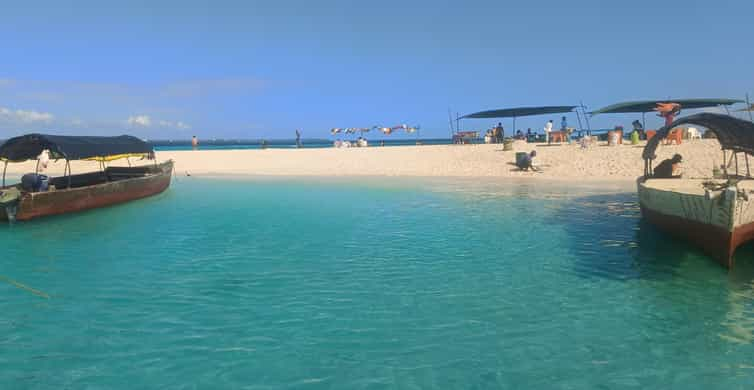
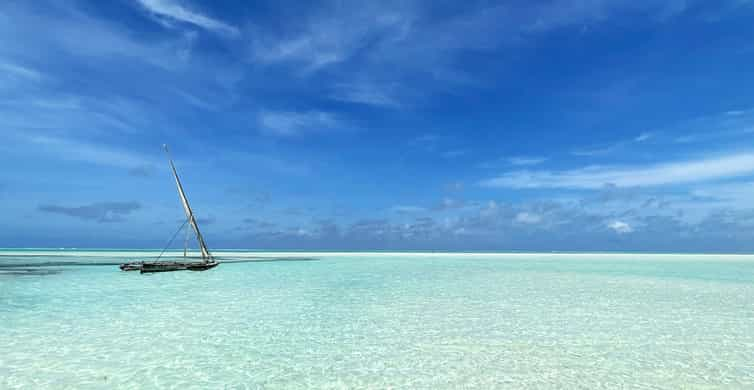
Most trips start with hotel pick-up in Stone Town around 9 am, then a 20–30 minute boat to Changuu for an hour or so with the tortoises and the old buildings, and an optional snorkel. Many continue to Nakupenda, a sandbank close to Stone Town that appears at low tide, for swimming and often a seafood lunch, and return by early afternoon.
Nakupenda has no shade or facilities, its size changes with the tide and it gets busy in the middle of the day, so bring a hat, sunscreen and water. Timing depends on the tide, which is why operators set the schedule. Compare half-day options on our Zanzibar tours page.
Sea turtles are somewhere else
Prison Island has tortoises, not sea turtles. When people search for swimming with turtles in Zanzibar they usually mean the Baraka Natural Aquarium in Nungwi or the Salaam Cave at Kizimkazi in the south (see Kuza and Salaam caves), where visitors swim with green turtles kept in enclosed natural pools. Both are presented as conservation projects, but keeping wild turtles in pools and letting visitors handle and feed them raises welfare concerns. The responsible alternative is to look for wild turtles on snorkelling trips, for example around Mnemba, and to watch them without touching.