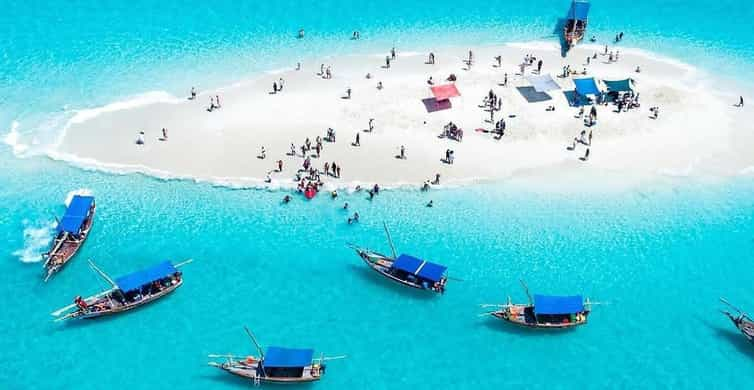
What a Mnemba island tour involves
Mnemba is a small island about 3 km off the north-east coast, surrounded by an oval reef roughly 7 km long. The island itself is occupied by a single luxury lodge, andBeyond Mnemba Island, and non-guests may not land or enter the protected zone around its beach. What the trips visit is the atoll: coral gardens, sandy channels and the outer reef, where you snorkel among reef fish and, with luck, green turtles, which also nest on the island.
Most snorkelling boats leave from Matemwe or Muyuni beach, the closest points, so the crossing is short. From Nungwi and Kendwa the ride around the northern tip is longer and more exposed, and from Paje and Jambiani tours start with a road transfer north. A half-day trip usually includes two snorkelling stops; full-day versions add a seafood or barbecue lunch on the beach. More on Matemwe in our beaches guide.
The Mnemba conservation fee
The reef lies within the Mnemba Island Marine Conservation Area, managed by the Zanzibar government. Under the fee schedule in force since 1 September 2025, non-East African visitors pay US$10 per adult per day and US$5 for children aged 5 to 15; under-fives go free. A higher fee, around US$25 per adult, applies in the Mnemba Island Marine Special Area closest to the island. Check whether your tour price includes the fee; if not, carry the exact amount in clean US dollar notes.
Dolphin tours in Zanzibar: Mnemba or Kizimkazi
Several species of dolphin live around Mnemba, and many Mnemba trips include a short dolphin search. The best-known dolphin trips, though, leave from Kizimkazi, a fishing village on the south coast inside the Menai Bay Conservation Area, where Indo-Pacific bottlenose and humpback dolphins are seen close to shore. The Safari Blue in the same bay also meets them on some days. Either way they are wild animals: sightings are likely on calm mornings but never guaranteed.
Swimming with dolphins in Zanzibar responsibly
Dolphin tourism off the south coast has grown fast since the early 1990s, and on busy mornings many boats race towards the same pod and drop swimmers in its path. Research on the south coast bottlenose dolphins found that tourist boats reduced the time they spent resting and feeding, and that groups moved more erratically when swimmers were in the water.
Choose an operator that states clearly that it does not chase or encircle dolphins: the boat should approach slowly from the side, keep its distance, cut the engine and let the animals decide whether to come closer, and it should leave after a short time. Watching from the boat is the gentlest option. If you do get in, slide in quietly, stay at the surface and never touch or follow them. A small-group boat makes this easier.
Best time, what is included and what to bring
Go early: the sea is usually calmer in the morning, visibility is often better and dolphins are seen more often before the boats build up. Trips run all year, but crossings get rough on windy days, especially when the south-east trade wind blows from June to September, and the long rains of April and May bring choppier seas; see the best time to visit Zanzibar.
Tours usually include transfers, the boat, mask, snorkel and fins, a guide, drinking water and fruit; lunch, the conservation fee and wetsuits vary. Life jackets should be offered to everyone. If you get seasick, take tablets before boarding. Bring reef-safe sunscreen, a rash vest or T-shirt, a towel, a dry bag and cash for the fee and tips. Do not stand on coral or buy shells. Certified divers can explore the atoll's outer walls: see diving in Zanzibar and all our Zanzibar tours.